
🏡 Maternal vs Paternal Homes: Why Emotional Leanings Differ
Children often lean towards maternal homes not because of more love, but because of lighter emotional boundaries, early exposure, and the mother’s role as an emotional bridge. It’s about where comfort feels effortless, where conversations flow, and where belonging doesn’t require performance.

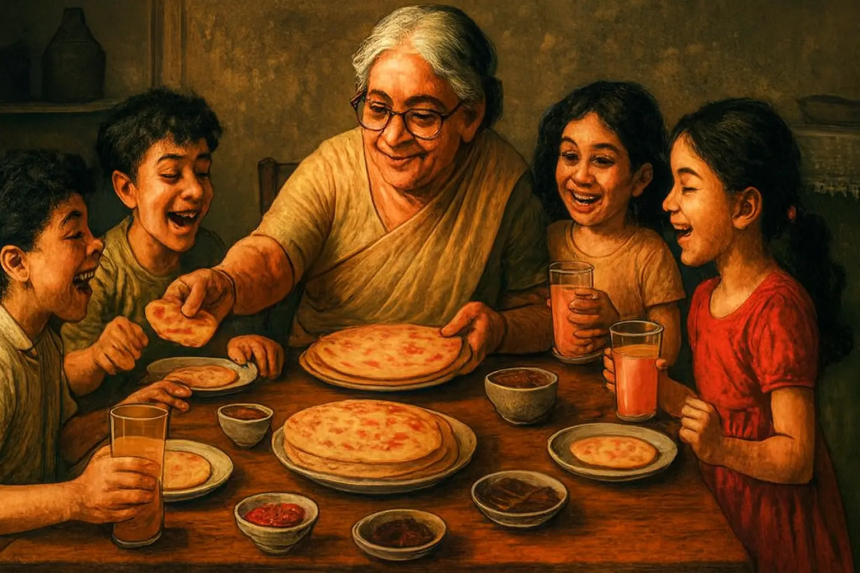
🌸 The Subtle Difference
“Nani ke ghar” feels effortless, like slipping into comfort. “Dadi ke ghar” carries equal love, yet a quiet shift in posture. It’s not about stricter rules or lesser affection — it’s about how emotional boundaries feel lighter in one space and more structured in another.
🧠 Emotional Wiring, Not Affection
Psychologists note that closeness is shaped by early emotional anchors.
-
Mothers often serve as the first source of reassurance and safety.
-
Children naturally gravitate towards spaces where their primary caregiver feels most at ease. Thus, maternal homes often become emotional safe zones.
👶 Early Exposure Matters
Infancy and early childhood often involve extended stays at maternal grandparents’ homes — during pregnancy, post-delivery, or childcare years. These formative experiences create emotional memory, even before verbal memory develops. The child may not recall events, but remembers the feeling of safety.
🌐 Mothers as Connectors
Mothers frequently carry the emotional labour of maintaining family ties — remembering birthdays, arranging visits, and facilitating conversations. This openness often makes maternal homes spaces where emotions are named, acknowledged, and shared freely.
⚖️ Behaviour vs Belonging
Children distinguish between:
-
Places to behave — where structure and discipline are emphasised.
-
Places to belong — where acceptance feels unconditional. Maternal homes often tilt towards belonging, while paternal homes lean towards structure.
🔄 Familiarity Builds Comfort
Repeated exposure — through visits, calls, and caregiving — strengthens emotional intimacy. The maternal side often appears more frequently, naturally deepening bonds.
🌍 Not Universal, Just Patterns
Many children bond deeply with paternal grandparents too, especially when:
-
They live together.
-
Paternal grandparents are primary caregivers.
-
Emotional openness exists equally on both sides. Psychology explains tendencies, not absolutes.
Share
What's Your Reaction?
 Like
0
Like
0
 Dislike
0
Dislike
0
 Love
0
Love
0
 Funny
0
Funny
0
 Angry
0
Angry
0
 Sad
0
Sad
0
 Wow
0
Wow
0