How Robotics is Revolutionizing Education: 10 Key Insights
Robotics is transforming education by making learning interactive, practical, and future-focused. From LEGO Mindstorms to NAO humanoids, educational robots engage students in STEM, coding, and problem-solving while fostering creativity, teamwork, and resilience. With 10 clear benefits — from boosting confidence to preparing for future careers — robotics is redefining classrooms and equipping learners with skills for tomorrow.

Picture a classroom where robots assist students in learning — explaining complex math problems in multiple ways, narrating interactive stories, or turning coding into playful games. This isn’t science fiction; it’s happening now. Robotics is reshaping how we learn, how we work, and the skills we need for the future.
What is Robotics?
Robotics is the science of designing, building, and operating intelligent machines that can sense, think, and act. These systems often perform repetitive, dangerous, or complex tasks efficiently and safely, freeing humans to focus on creativity, planning, and collaboration.
What Are Educational Robots?
Educational robots are programmable tools created specifically for teaching and learning. They make STEM subjects — science, technology, engineering, mathematics — more engaging by offering hands-on, interactive experiences. Students experiment, solve problems, and apply knowledge in real time, making learning practical and fun.
Key Features of Educational Robots
-
Built for learning, not entertainment
-
Use simple, block-based or visual coding languages
-
Encourage creativity, teamwork, and critical thinking
-
Suitable for all age groups — from preschool to university
-
Often paired with interactive kits, apps, or platforms
Examples of Educational Robots
| Robot Name | Key Features | Best For |
|---|---|---|
| LEGO® Mindstorms | Modular kits with sensors, motors, programmable bricks | Ages 10+, schools, competitions |
| Bee-Bot | Simple directional commands for coding basics | Ages 4–7, primary education |
| Sphero SPRK+ | Programmable robotic ball with app control | Ages 8+, STEM learning |
| VEX Robotics Kits | Engineering-grade kits for competitions | Middle to high school |
| Dash and Dot | Playful coding robots with puzzles | Ages 6–12, beginners |
| NAO Robot | Humanoid robot with AI and speech recognition | High school, colleges, research |
| Ozobot Evo | Follows color-coded lines and app commands | Ages 6+, beginner programmers |
| Makeblock mBot | Affordable kits with block/Arduino coding | Ages 8+, workshops |
| Robomaster EP DJI | Advanced AI and robotics learning | High school, universities |
| Cubetto | Screen-free wooden robot with coding blocks | Ages 3–6, preschool |
10 Benefits of Educational Robots
-
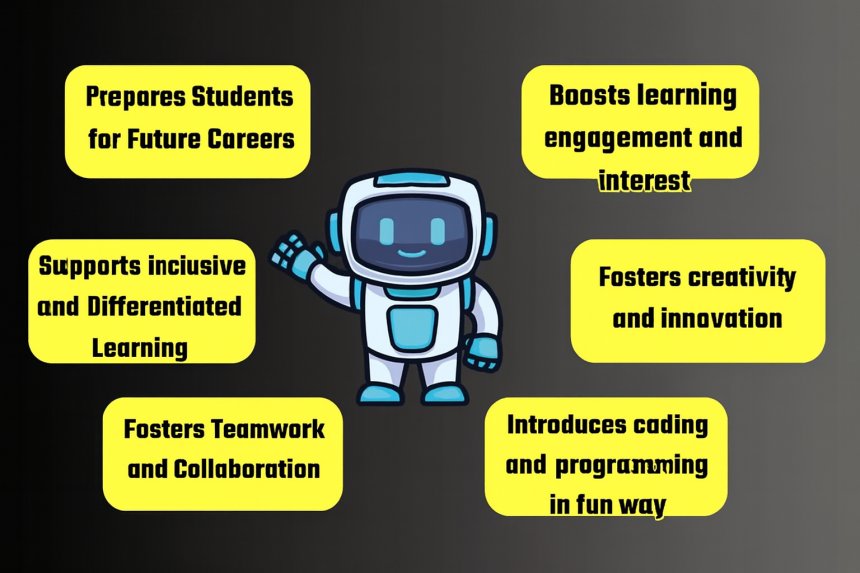
Boost Engagement – Lessons become interactive, keeping students excited about STEM.
-
Spark Creativity – Designing and programming robots inspires innovation.
-
Make Coding Fun – Visual programming introduces coding without intimidation.
-
Develop Problem-Solving Skills – Students learn to analyze, test, and refine solutions.
-
Promote Teamwork – Group projects mirror real-world collaboration.
-
Encourage Lifelong Curiosity – Robotics nurtures exploration beyond the classroom.
-
Support Inclusive Learning – Adaptable for diverse learning styles and abilities.
-
Build Confidence & Resilience – Trial-and-error teaches persistence and growth.
-
Prepare for Future Careers – Early exposure to automation and AI builds future-ready skills.
-
Bridge Theory & Practice – Students apply abstract concepts in tangible ways.
Share
What's Your Reaction?
 Like
0
Like
0
 Dislike
0
Dislike
0
 Love
0
Love
0
 Funny
0
Funny
0
 Angry
0
Angry
0
 Sad
0
Sad
0
 Wow
0
Wow
0