15-Year-Old Completes PhD in Quantum Physics, Sets Sights on AI-Driven ‘Superhumans’
At just 15, Belgian prodigy Simons has earned a PhD in quantum physics from the University of Antwerp, focusing on Bose polarons in ultracold quantum systems. His academic journey has been extraordinary—completing high school at 8, a master’s degree by 12, and internships at the Max Planck Institute. Now pursuing a second PhD in medical science with a specialization in AI, Simons aims to merge quantum theory with biomedical innovation. His ultimate ambition is to create “superhumans” by extending human life through artificial intelligence and regenerative medicine. While his vision sparks debate around ethics and feasibility, his achievements highlight both the acceleration of science and the provocative possibilities of human enhancement.

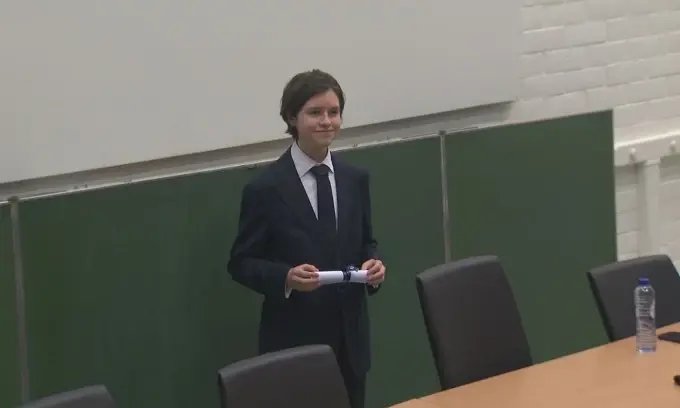
A Belgian teenager has achieved one of the rarest milestones in modern academia—earning a PhD in quantum physics at just 15. But this achievement is only the beginning. Already venturing into advanced research in artificial intelligence and human enhancement, he envisions a future where science could create “superhumans.”
From Quantum Physics to Biomedical Innovation
The University of Antwerp recently confirmed that Simons successfully defended his doctoral thesis in theoretical physics, a feat typically reserved for researchers much older. His dissertation explored Bose polarons in superfluids and supersolids—complex quantum systems involving ultracold matter.
Simons is now pursuing a second PhD in medical science with a focus on AI, aiming to design technologies that extend human life. His ambition, as he describes it, is nothing less than the development of enhanced human beings.
Exploring Bose–Einstein Condensates
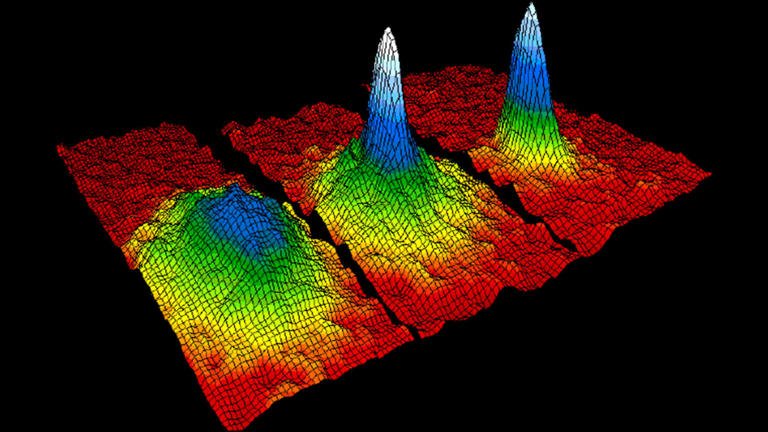
His doctoral work examined the quantum behavior of Bose–Einstein condensates, where atoms cooled near absolute zero act as a single entity. By studying Bose polarons—foreign particles interacting with these condensates—he provided new insights into quasiparticle behavior in quantum fluids.
This research contributes to the understanding of many-body systems, with implications for material science, quantum computing, and astrophysics. The University of Antwerp validated his dissertation as a significant addition to theoretical physics.
Accelerated Academic Journey
Before earning his PhD, Simons completed both bachelor’s and master’s degrees in physics at Antwerp in under two years. He also interned at the Max Planck Institute for Quantum Optics in Germany, where he began exploring connections between quantum systems and biological processes.
This interdisciplinary exposure shaped his current path. He is now enrolled in a medical science doctoral program in Munich, focusing on AI applications in diagnostics, aging, and regenerative medicine.
AI and the Quest for Longevity
In interviews, Simons has expressed his motivation to extend human life through science. Speaking to Belgian broadcaster VTM, he said: “After this, I’ll start working towards my goal: creating super-humans.”
His fascination with biological enhancement dates back to age 11, when he described defeating aging as his ultimate aim. Today, he sees AI in medicine as the most promising route to that vision.
This ambition aligns with global momentum in longevity research, where companies like Altos Labs and Calico Life Sciences are investing heavily in cellular reprogramming, AI-guided diagnostics, and anti-aging therapies. Simons’ entry into this field is unique—not only because of his age, but because of his deep grounding in quantum theory.
Defying Traditional Pathways
Simons’ academic timeline is extraordinary. He finished high school at 8, entered university before 10, and earned a master’s degree in quantum physics by 12. His initial plan to graduate from Eindhoven University of Technology at 9 was delayed, leading him to Antwerp instead.
At each stage, he completed coursework at remarkable speed. During his master’s program, he finished all requirements in one semester, dedicating the next to research and his internship at Max Planck.
While child prodigies often attract public fascination, Simons’ pursuit of radical biomedical innovation places him in a rare category—young researchers pushing into ethically and scientifically controversial domains.
Ambitions That Challenge Boundaries
His transition from quantum physics to biomedical AI is unconventional, and many scientists remain skeptical about the feasibility of engineering “superhumans.” The field of human enhancement, closely tied to transhumanism, is still largely speculative beyond assistive technologies and precision medicine.

Scientific progress continues in areas like aging biomarkers and tissue engineering, but the idea of superhuman capabilities remains theoretical. Still, Simons frames his work as a direct path toward reengineering human biology, not just treating it.
That such ambitions come from someone not yet old enough to vote only intensifies debates around ethics, oversight, and the pace of high-stakes scientific advancement.
Share
What's Your Reaction?
 Like
0
Like
0
 Dislike
0
Dislike
0
 Love
0
Love
0
 Funny
0
Funny
0
 Angry
0
Angry
0
 Sad
0
Sad
0
 Wow
0
Wow
0