ChatGPT Introduces New Health Mode in the US
OpenAI has launched ChatGPT Health in the US, a new mode that helps users interpret lab results, understand doctor notes, and access personalised health guidance by connecting wellness apps. While the tool is designed to support—not replace—medical care, experts warn of risks such as misdiagnosis and false reassurance. Real-life cases show patients finding value in its explanations, but medical professionals stress that AI should not substitute physician input. Currently, only US users can join the waitlist, with strict privacy laws preventing rollout in the UK and EU.


OpenAI has unveiled a new feature called ChatGPT Health, designed to assist users with medical-related queries. Currently available only in the United States, this mode allows patients to ask health questions, analyse lab results, interpret unclear doctor notes, and even review clinical history.
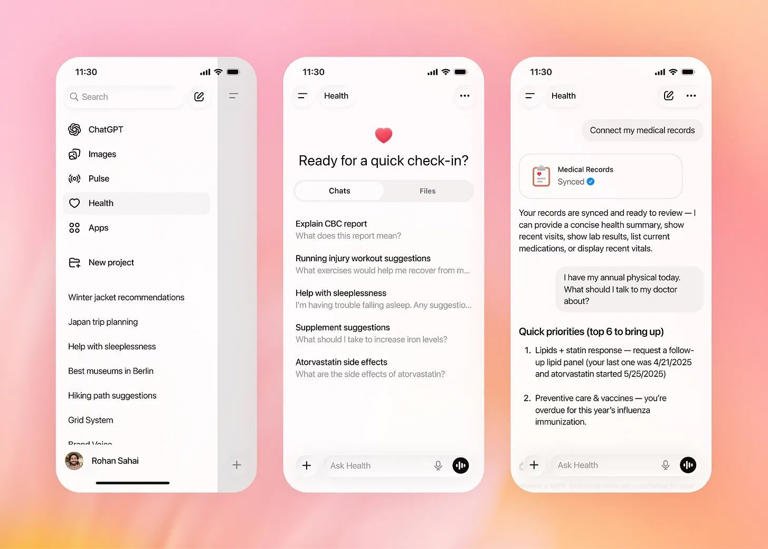
The company emphasised that the tool is meant to support, not replace, medical care. It is not intended for diagnosis or treatment. Instead, it can provide guidance such as post-surgery diet suggestions, health insurance comparisons, or explanations of drug side effects.
Users can connect their medical records and wellness apps like Apple Health for personalised responses. OpenAI assured that patient data will be encrypted, conversations won’t be used for training, and users remain in full control of access permissions.
At present, only US users can join the waitlist, with medical record uploads restricted to the US due to stricter privacy laws in the UK and EU.
Real-Life Example
Lisa Freeman, a 43-year-old mother from Bristol, shared how ChatGPT helped her better understand her condition, intercostal neuralgia. After doctors prescribed painkillers, she consulted ChatGPT, which suggested discussing nerve blockers with her physician. This led to her being prescribed amitriptyline, which relieved her pain within two weeks. She also used ChatGPT to understand why the NHS recommended an X-ray instead of an MRI, finding the explanation helpful.
Why Patients Turn to AI
A survey by Semble revealed that one in four patients use AI to better understand their health. Christoph Lippuner, Semble’s CEO, noted that convenience and clarity are key reasons.
Expert Concerns

Medical experts caution that relying on AI for health advice can be risky. While ChatGPT can pass medical exams, it may still produce inaccurate or misleading information. Cases have emerged where patients followed unsafe advice, such as replacing salt with sodium bromide. Experts warn that chatbots may reinforce user assumptions, potentially leading to misdiagnosis or false reassurance.
Solicitor Sophie McGarry from Patient Claim Line highlighted that AI health advice could cause unnecessary stress, misdiagnosis, or delays in proper treatment, adding pressure to already stretched healthcare systems.
OpenAI stated it collaborated with over 260 physicians to refine ChatGPT Health, ensuring it recommends follow-ups with doctors when necessary and avoids oversimplification.
Share
What's Your Reaction?
 Like
0
Like
0
 Dislike
0
Dislike
0
 Love
0
Love
0
 Funny
0
Funny
0
 Angry
0
Angry
0
 Sad
0
Sad
0
 Wow
0
Wow
0